
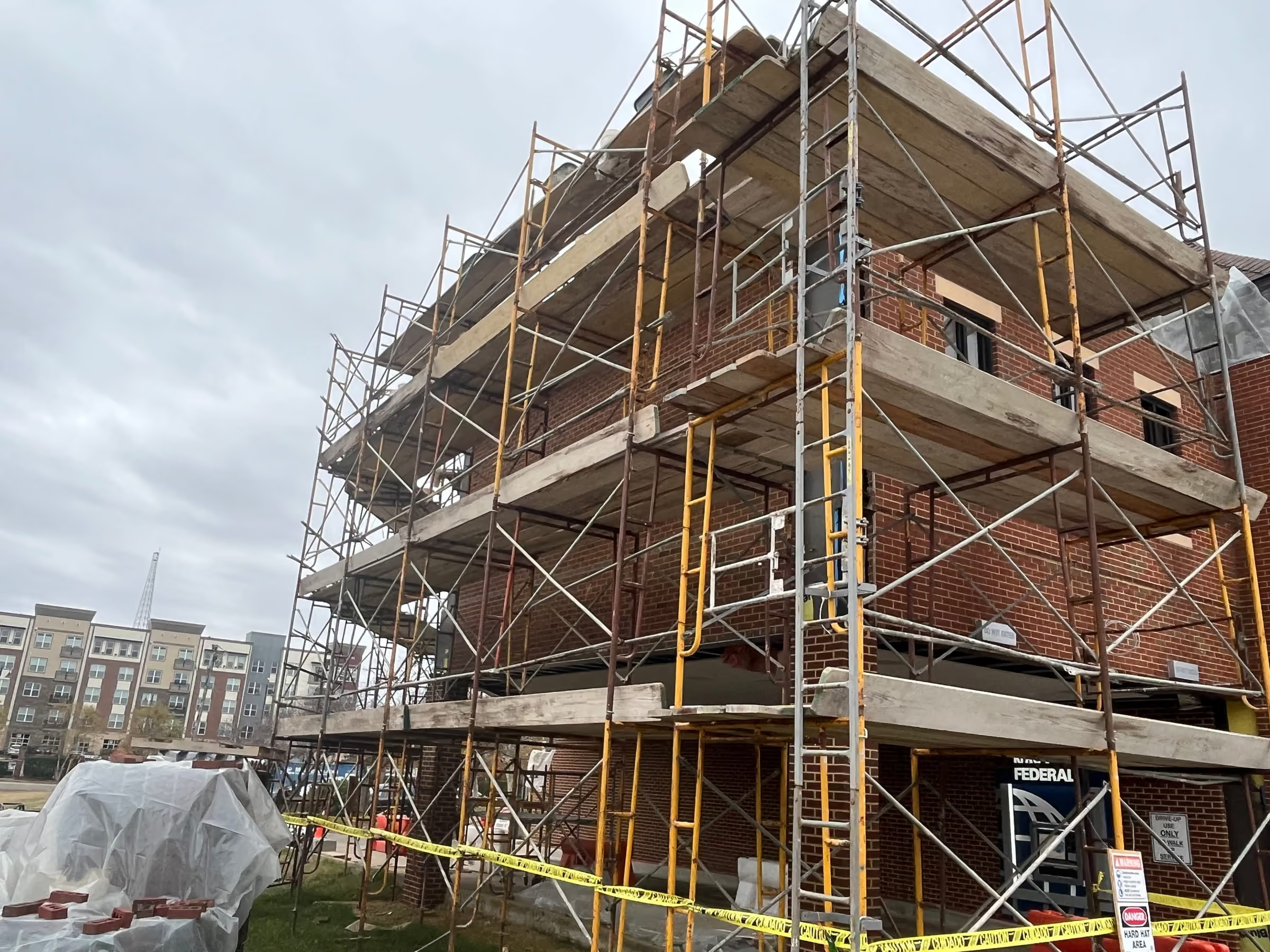
What the training covers
PS&M builds scaffold competent persons the way the standard defines the role — able to identify existing and predictable hazards, and authorized to correct them. The curriculum covers:
- Scaffold types and components — supported, suspended, and mobile systems, and the frames, planks, braces, and ties that make them
- Load capacities — 29 CFR 1926.451(a) requires every scaffold to support its own weight plus at least four times the maximum intended load, and your competent person has to know what that means in planks, materials, and people
- Inspection criteria — the pre-shift and post-event inspections 1926.451(f)(3) assigns to the competent person, and the visible defects that take a scaffold out of service
- Erection and dismantling supervision — the duties 1926.451(f)(7) places on the competent person every time a scaffold goes up, moves, changes, or comes down
- Fall protection requirements — guardrail systems and personal fall arrest above Subpart L’s 10-foot threshold
- Hazard identification and correction — spotting the hazardous condition and having the standing to fix it before the shift starts
Training requirements for erectors, dismantlers, and scaffold users map to 29 CFR 1926.454.
Who needs scaffold competent person training?
Any employer whose crews erect, move, dismantle, or alter scaffolds — or work from them. 29 CFR 1926.451(f)(7) permits scaffold erection and dismantling only under the supervision and direction of a competent person, and 1926.451(f)(3) requires a competent person to inspect every scaffold for visible defects before each work shift. Miss either duty and you are exposed — scaffold violations sit near the top of OSHA’s most-cited list year after year, and a citation is the cheap outcome.
The reach is wider than construction. Under 29 CFR 1910.27, scaffolds in general industry must meet 1926 Subpart L too — so industrial plants, maintenance contractors, and facility teams staging scaffolds for outages and repairs carry the same duties as a general contractor.
Taught on your site, on your scaffolds
We deliver instructor-led training at your facility or jobsite, built around the scaffold systems your crews actually erect — never from boilerplate. Trainees inspect real components, walk real setups, and practice the calls the role demands. Working in California? Cal/OSHA’s Construction Safety Orders under 8 CCR carry scaffold rules of their own — where you build shapes what we teach.
Crews with exposure at height beyond the platform should pair this course with fall protection training to 29 CFR 1926.501–503 — the hazards overlap, and the standards compound.
Competency you can prove
Every trainee finishes with a certificate of completion — field competency demonstrated, and your commitment to OSHA scaffold standards documented, dated, and defensible. That record, plus the written designation behind it, is exactly what a compliance officer asks for first. If the rest of your program needs the same rigor, our OSHA compliance consulting closes the gaps before an inspection finds them.
Request a quote or call 213.290.3013. Tell us the scaffold systems, the sites, and the headcount — we will build the class around them.