
Skip to content
PS&M

Industries · 04

Safe plants make trusted brands

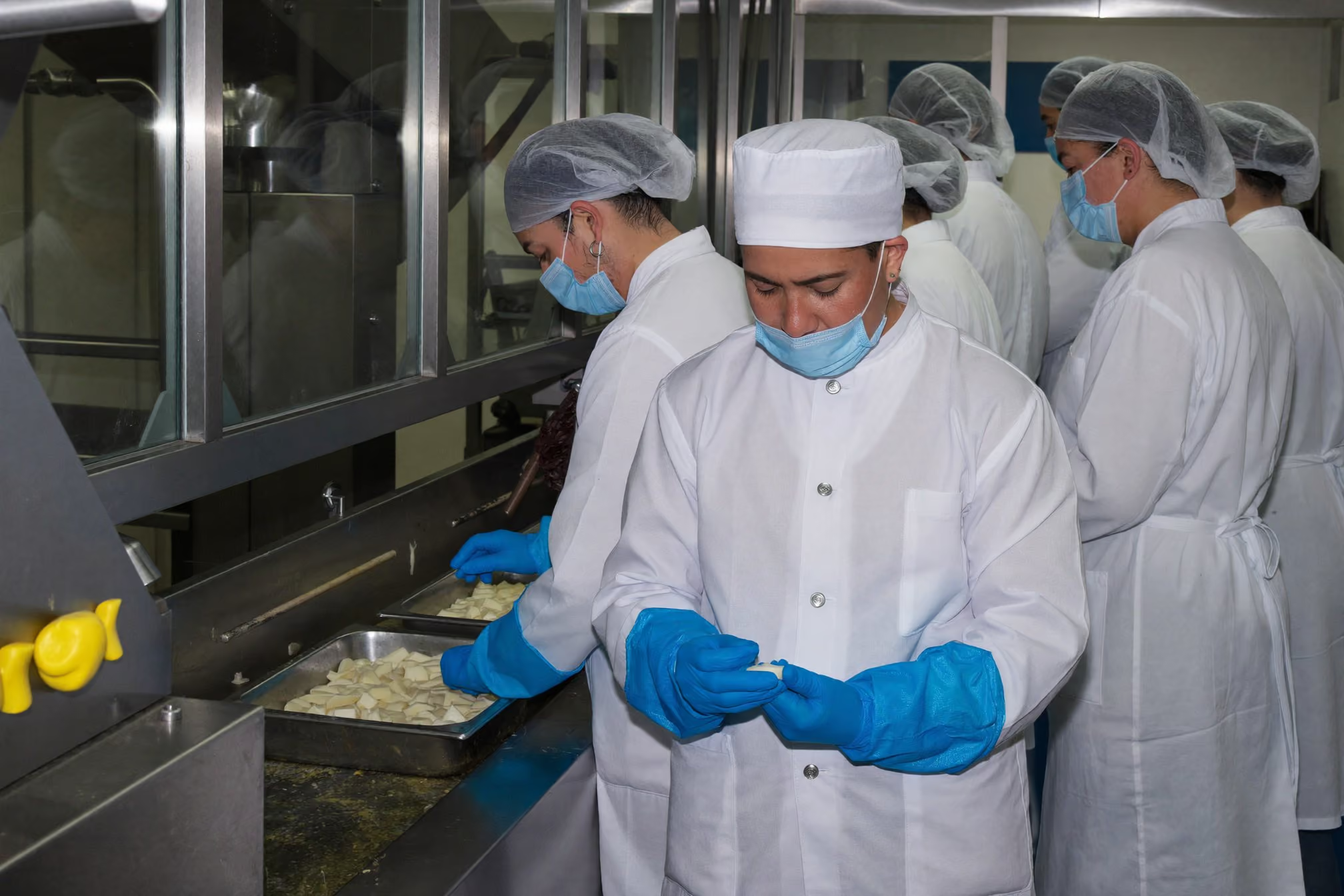
Food processing stacks hazards most industries never combine — high-speed equipment, aggressive sanitation chemistry, cold rooms, and wet floors, all at line speed. PS&M builds safety programs that protect your people and your brand at the same time, because the plant that hurts workers eventually hurts the label too.

What does a food processing safety consultant cover?

The full collision of production and sanitation: machine guarding at line speed, lockout/tagout engineered for cleaning cycles, chemical safety for sanitizers and caustics, slip control for permanently wet floors, cold storage and freezer work, and confined space entry for tanks, silos, and pits.

Training tuned to your plant

  • PPE selection, use, and sanitation that protects workers while meeting hygiene requirements
  • LOTO for production and sanitation crews — the procedures, the locks, the discipline
  • Chemical safety for cleaning agents and sanitizers, with SDS fluency
  • Slip, trip, and fall prevention for wet, inclined, and high-traffic areas
  • Ergonomics for repetitive, high-strain line and palletizing tasks
  • New-hire orientation that sets expectations before the first shift, in the languages your workforce speaks

Consulting for processors and packers

Safety audits tailored to processing environments, process hazard reviews, industrial hygiene sampling for air quality and noise, machine guarding assessments with interlock evaluation, and written programs that integrate with your food safety system instead of fighting it.

Coverage when the plant needs it

Safety managers for program leadership, site safety officers for high-risk periods, and temporary coverage through audits, expansions, and peak season — carried on PS&M’s payroll and insurance.

Protecting the workforce protects the brand. Tell us about your plant — response within one business day.

How we help here

FAQ

Questions we hear

What makes food processing safety different from general manufacturing?

The sanitation cycle. Every night, crews open equipment that ran all day, apply aggressive chemicals, and work wet floors under time pressure — the exact window where most serious food-plant injuries happen. Programs that ignore third-shift sanitation are ignoring the plant's riskiest hours.

How do you handle lockout/tagout during cleaning cycles?

With procedures written for sanitation reality — equipment-specific isolation that sanitation crews can execute dozens of times a night, alternative protective measures where the standard allows them, and training that reaches the people actually holding the locks at 2 a.m. LOTO failures during cleaning are among OSHA's most-cited food-industry violations.

Can safety controls coexist with food safety and quality programs?

They have to — and done right, they reinforce each other. We integrate worker safety controls with your existing HACCP, GMP, and sanitation programs so PPE, chemical handling, and hygiene requirements pull in the same direction instead of competing for the same minutes.

Do you cover cold storage and freezer work?

Yes — cold stress management, PPE selection for sustained low-temperature work, safe practices around freezer doors and racking, and emergency procedures for ammonia refrigeration areas, including awareness training for employees working near the systems.

Start the conversation

Put a rigorous safety partner on your side

We respond within one business day — same day for citations and incidents.